Breaking the Silence,
Restoring Wholeness
JDI creates safe spaces for healing, amplifies lived experiences to drive advocacy, and equips communities with practical tools to thrive emotionally and psychologically.
Our Programmes
Programmes driving the change.
Unburden Group Therapy Sessions
Creating Safe Spaces for Healing, Expression, and Support
Mental health challenges remain widespread, yet access to affordable and stigma-free support systems is still limited for many Nigerians. Cultural stigma, cost barriers, and lack of safe spaces often prevent individuals from seeking help. Unburden addresses this gap by providing accessible, community-based psychosocial support, particularly for individuals and groups who may otherwise be underserved. Launched in November 2019, the Unburden Group Therapy Sessions are the flagship project of JDI's mental health initiative. Designed as a safe and inclusive space, the programme provides individuals with the opportunity to openly share their experiences, access professional mental health support, and connect with others in a supportive environment.
JDI implements Unburden as a structured, recurring group therapy model, bringing together participants in a confidential and professionally guided setting. The sessions are designed to encourage open dialogue and emotional expression, provide access to mental health professionals at no cost, and foster peer support and shared healing. In addition to general public sessions, JDI tailors Unburden to meet the needs of specific vulnerable groups, including: persons living with Sickle Cell Disease; persons with disabilities; individuals affected by substance use disorders; survivors of sexual and gender-based violence (SGBV); and first responders supporting SGBV cases. This targeted approach ensures that support is both inclusive and context-specific. JDI aims to expand the reach of Unburden sessions, integrate hybrid (virtual and in-person) models, and deepen partnerships.
- Free access to trained mental health professionals
- Structured group sessions for open dialogue and emotional expression
- Tailored sessions for persons with Sickle Cell Disease
- Sessions for persons with disabilities and SGBV survivors
- Support for individuals affected by substance use disorders
- Over 40 group therapy sessions conducted
- 400+ individuals supported through Unburden sessions and psychosocial interventions
- Increased access to free mental health support services
- Improved willingness among participants to seek help and share experiences
- Strengthened community awareness and dialogue around mental health
Stories from Unburden
Amplifying Lived Experiences to Drive Advocacy and Change
Many individuals, particularly those from vulnerable or underserved groups, experience significant mental health and social challenges that remain invisible due to stigma, exclusion, or lack of platforms to share their experiences. Without visibility, these challenges are often overlooked in policy, programming, and community response. Stories from Unburden is a storytelling and advocacy component of JDI's mental health initiative, developed from insights gathered during the Unburden Group Therapy Sessions. The initiative was inspired by JDI's first Unburden session held for persons with disabilities in the Karamajiji Disability Colony, FCT — where powerful lived experiences revealed critical gaps in access, inclusion, and support. In response, JDI created a platform to document and amplify these voices, transforming personal stories into tools for awareness and advocacy.
Stories from Unburden adopts a human-centred storytelling approach, capturing real-life experiences of individuals who have participated in Unburden sessions and have consented to share their stories publicly. Through video storytelling, willing participants share personal experiences and challenges, highlight systemic and social gaps affecting their well-being, and direct their narratives toward specific audiences — communities, institutions, and decision-makers who can drive change. This approach ensures that advocacy is not abstract, but grounded in real voices and lived realities.
- Video storytelling capturing real-life mental health experiences
- Human-centred, consent-based documentation process
- Narratives directed at communities, institutions, and policymakers
- Distribution through social media and advocacy channels
- 22 real-life stories documented since March 2021
- Increased visibility of mental health and social challenges across diverse groups
- Strengthened advocacy efforts using lived experiences as evidence
- Amplified voices of underserved populations, including persons with disabilities
- JDI aims to expand story production and leverage content for targeted policy advocacy
Wellness Toolkit
Equipping Individuals with Practical Tools for Emotional Well-being
Many individuals experience stress, emotional overwhelm, and mental health challenges but lack accessible, practical tools to manage these experiences effectively. The Wellness Toolkit is a structured self-help intervention developed by JDI to support individuals in managing stress, emotional triggers, and overall mental well-being. Adapted from the Wellness Toolbox within the Wellness Recovery Action Plan (WRAP) developed by Mary Ellen Copeland, the toolkit has been customized to suit local contexts and group-based engagement, helping participants build a personalized set of coping strategies for real-life situations.
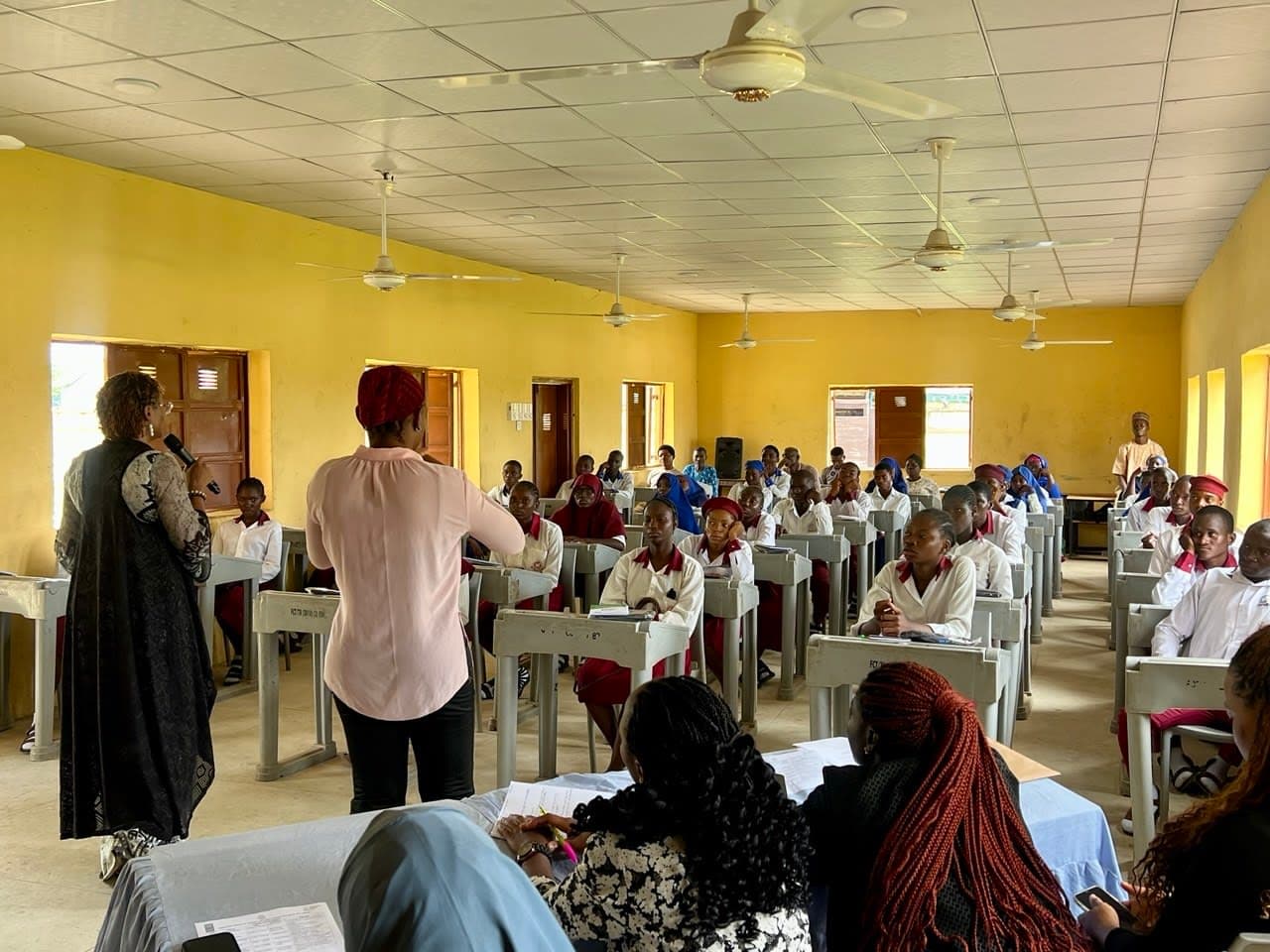
JDI deploys the Wellness Toolkit through facilitated group sessions, guiding participants through a reflective and interactive process to develop their own 'wellness tools.' Participants are supported to identify personal stressors and triggers, build a customized list of coping strategies, strengthen self-awareness and emotional regulation, and take ownership of their mental well-being. The group-based model encourages shared learning while maintaining personal reflection. JDI has implemented the Wellness Toolkit with team members of Max FM / TVC News Abuja; journalists across multiple media houses in the FCT in partnership with PAGED Initiative; and teachers and students of Government Secondary Schools in the FCT.
- Personalized coping strategy development for each participant
- Deployed with Max FM / TVC News team members, Abuja
- Deployed with journalists across FCT in partnership with PAGED Initiative
- Deployed with teachers and students in FCT Government Secondary Schools
- Group-based delivery enhancing engagement and personal relevance
- 14 successful Wellness Toolkit deployments across professional and institutional groups
- Improved self-awareness and emotional regulation among participants
- Strengthened individual coping mechanisms for stress and triggers
- Increased adoption of proactive mental wellness practices
- JDI plans to expand to more professional groups and explore digital adaptation
Teacher Capacity Strengthening & Mental Health Support Programme
Strengthening Education Through Teacher Well-being
Quality education outcomes are closely linked to teacher effectiveness and well-being. However, many teachers in public secondary schools face challenges related to limited access to continuous professional development and inadequate mental health support — factors that directly affect curriculum delivery and student learning outcomes. In February 2023, JDI entered into a 5-year strategic partnership with the T.Y Danjuma Foundation to implement a comprehensive education and mental health programme designed to improve curriculum delivery in public secondary schools across the FCT, Kogi, Kwara, Niger, and Kaduna State.
JDI is implementing a multi-component, systems-strengthening intervention combining teacher training, mental health support, peer learning, and policy engagement. Key components include: structured Teacher Trainings to enhance curriculum delivery; one-day Mental Health Support services for participating teachers; Digital Community Building via a Telegram-based platform for peer engagement; Step-Down Sessions where trained teachers cascade knowledge to colleagues; Resource Provision of mental health learning materials to school libraries; Advocacy & Media Engagement through documentaries and Stakeholder Engagement facilitating feedback sessions with government ministries.
- Structured teacher capacity-building sessions across 5 states
- One-day basic mental healthcare services for participating teachers
- Telegram-based digital community for continuous peer support
- Step-down cascade training within schools
- 200+ mental well-being books donated to public secondary schools
- Improved teacher capacity for effective curriculum delivery, reaching 500+ teachers
- More than 200 mental well-being books donated to public secondary schools
- Increased access to mental health support for educators
- Strengthened peer-to-peer learning and knowledge transfer systems
- Enhanced awareness of teacher well-being as a driver of education outcomes
Inclusion First Programme
Advancing Mental Health, Inclusion, and Education for Persons with Disabilities
The Inclusion First Programme is a multi-year, multi-phase intervention implemented by JDI in partnership with Liliane Fonds, through The Leprosy Mission Nigeria, to advance the rights, well-being, and inclusion of persons with disabilities. Launched in 2022, the programme began with community-based mental health support and advocacy for youths with disabilities and their families, and has since evolved into a systems-level intervention in secondary schools — promoting inclusive education and psychosocial resilience. Phase 1 (2022) focused on delivering 20 tailored Unburden Group Therapy sessions across six disability clusters in Abuja and Lagos. Phase 2 (2023–2026) expanded into Government Secondary Schools in Kuje and Kwali, FCT, progressing from psychosocial support and awareness (2023), to empathy-building using the Story Exchange Model (2024), to student-led advocacy and systems change (2025), and Disability Inclusion Advocacy and Stakeholder Engagement (2026).
JDI implemented the programme through a phased, integrated model combining psychosocial support, advocacy and storytelling, empathy-building interventions, capacity strengthening for educators, and student-led advocacy. Phase 1 targeted six disability clusters — visually impaired, hearing impaired, persons affected by leprosy, persons with dwarfism, persons living with Sickle Cell Disease, and persons with albinism. Phase 2 expanded into schools with progressive, annually-themed interventions: psychosocial support and awareness; empathy-building using the Story Exchange Model; student-led advocacy groups (Inclusion First Advocates); and high-level stakeholder engagement in 2026.
- Phase 1 (2022): 20 Unburden sessions across 6 disability clusters in Abuja & Lagos
- Phase 2 (2023): Psychosocial support & inclusion sensitization in FCT schools
- Phase 2 (2024): Empathy-building using the Story Exchange Model
- Phase 2 (2025): Establishment of student Inclusion First Advocates
- Phase 2 (2026): Radio engagement, social media series & high-level stakeholder meetings
- 737 total beneficiaries (students with and without disabilities and their teachers)
- 89%+ of students with disabilities reported improved mental well-being
- 78%+ showed increased confidence and daily functioning
- 98% of students without disabilities demonstrated improved understanding of inclusion
- 87% showed positive attitude shifts toward peers with disabilities
JDI Mental Health Club
Promoting Early Mental Health Awareness and Positive Behaviour in Schools
Many adolescents in secondary schools have limited understanding of mental health, despite facing increasing social and emotional challenges. This gap contributes to harmful behaviours, poor coping mechanisms, and unhealthy peer dynamics. The need for early intervention became evident during JDI's World Mental Health Day Awareness Project in 2021 at Nile University of Nigeria, which engaged 161 public secondary school students and 28 teachers and counsellors — participants strongly expressed a desire for structured mental health platforms within their schools. In response, JDI developed the Mental Health Club model, piloted in August 2022 with 28 teachers and counsellors from four FCT public secondary schools, with support from the T.Y Danjuma Foundation and the FCT Secondary Education Board.
The JDI Mental Health Club is a school-based extracurricular initiative designed to promote early mental health awareness among adolescents and create safe, supportive environments within secondary schools. The club aims to address cultism, drug abuse, bullying, and negative peer pressure by equipping students with knowledge, skills, and support systems for informed, healthy life choices. The model is teacher-led to ensure sustainability — teachers and school counsellors are trained to establish and manage the clubs. Clubs provide safe spaces for peer dialogue, learning, and support, with a preventive focus building resilience and positive decision-making. Participating schools: Government Secondary School, Gwagwa; Government Secondary School, Jabi; Government Secondary School, Airport; Government Girls Secondary School, Dutse.
- Teacher-led structure for long-term sustainability in schools
- Safe spaces for student dialogue, learning, and peer support
- Preventive focus on resilience and positive decision-making
- Piloted at GSS Gwagwa, GSS Jabi, GSS Airport, and GGSS Dutse
- Supported by the T.Y Danjuma Foundation & FCT Secondary Education Board
- 28 teachers and counsellors trained to establish and manage school-based mental health clubs
- Structured mental health education introduced in 4 FCT public secondary schools
- Increased awareness and early exposure to mental health concepts among students
- Demonstrated that teacher-led school clubs are an effective, sustainable approach
- JDI plans to expand the model to more schools and integrate with broader education programming